Skip to content
DavisvilleLock & Key Co.Open 24/7 (289) 217-4629
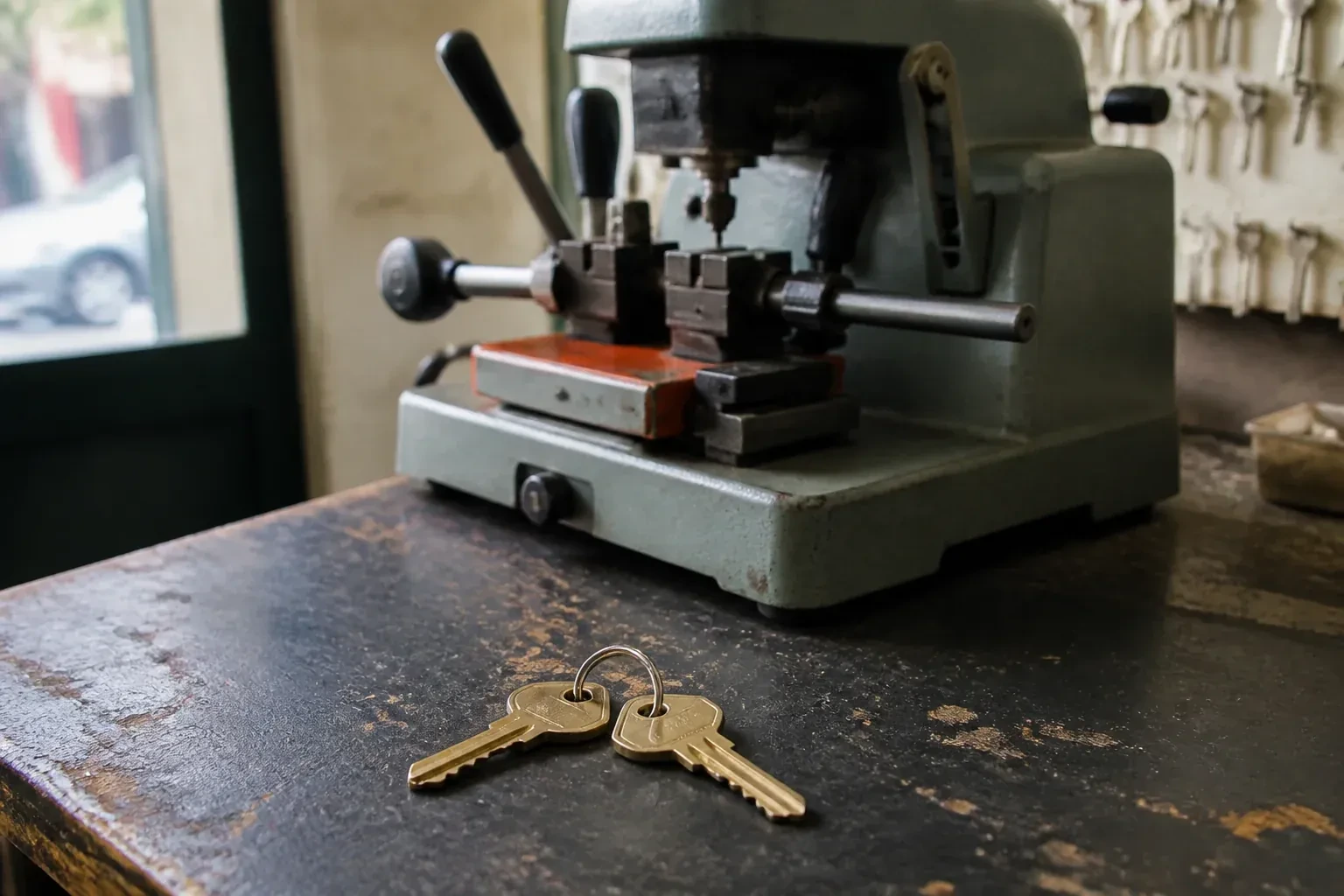
Two brass house keys on a ring resting on a workshop counter. — Spare Car Key Duplication, Lawrence Park

Car keys · Lawrence Park

Spare Car Key Duplication

A lockout last month ended with a locksmith opening the door and going home, and the same single key has been carried ever since with nothing behind it. The relief of getting back in faded within a week into the same exposure.

In plain words

When a key's blade has thinned or its buttons have gone soft with age, waiting for it to fail outright is the harder plan to manage. A spare made from the original while it still works produces a fresh blade and, where the car carries a chip or remote, a fresh electronic match, so the household stops depending on the most tired copy in the house. The new key is tested apart from the old one in every lock and the starting system, and the worn original can then be retired or kept as a genuine backup rather than the only option.

Sound familiar?Lawrence Park

The call
A teenager just passed a driving test and reasonably wants a key of their own rather than negotiating over the family's single copy every time the car is needed. Two drivers and one key keep colliding on the same schedule.
NextHow the visit goes

Spare Car Key Duplication · Lawrence Park

How the visit goes

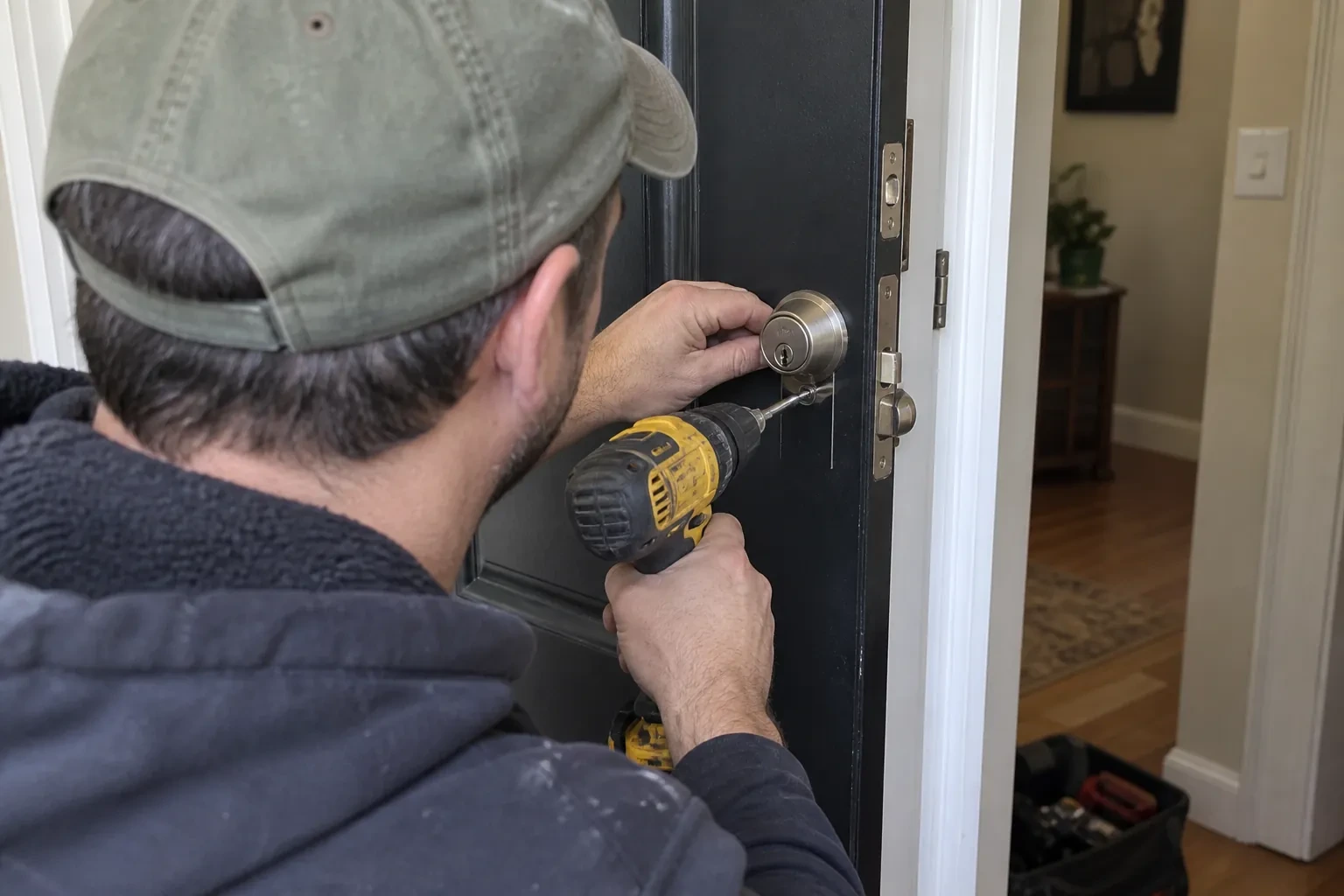
Person in a green cap holding a brushed-metal deadbolt against a dark door while a yellow drill rests below it. — Lawrence Park
  1. Scene 1

    Assessing the fob's electronics

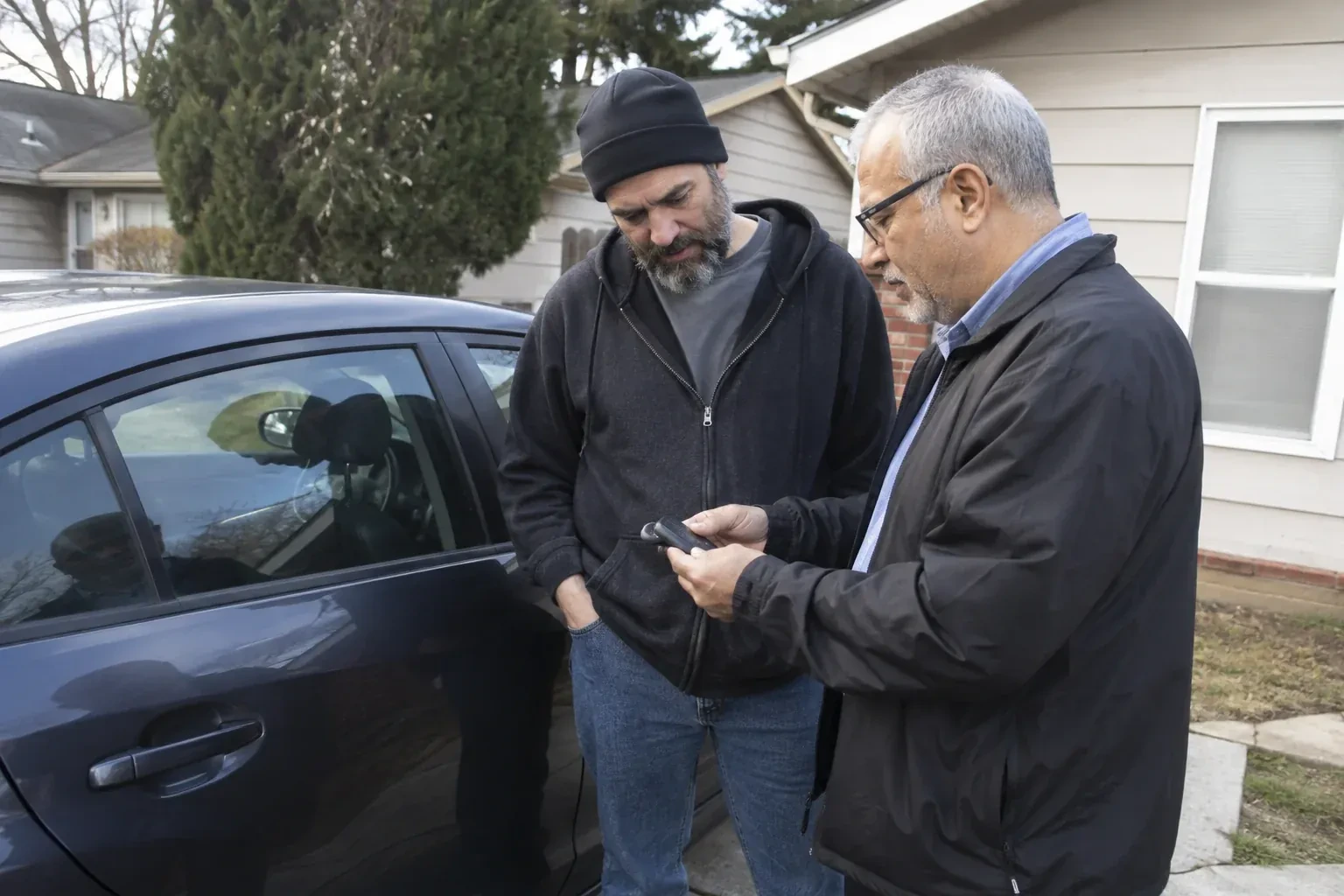
    Where the key includes a remote or a proximity fob, the locksmith checks the battery, tests every button against the vehicle, and confirms whether functions like remote start, a panic alarm or a power hatch release are part of what the spare needs to reproduce. A fob that has been dropped or exposed to water sometimes still passes buttons but fails intermittently, which is worth knowing before it becomes the pattern a new key is measured against. Confirming the battery type while the shell is open also saves a second trip later when it eventually runs down on its own.

  2. Scene 2

    Working from a used or single-key vehicle

    When only one key exists for the vehicle, the whole process leans on that single copy: its blade is traced or measured, its chip is read where the system permits it, and every remote function it performs is noted before work starts, since there is nothing else to check against. The new key is built to match, then tested on its own, away from the original, to confirm it genuinely operates independently rather than only appearing to work while the first key happens to be nearby with its own signal still in range.

  3. Scene 3

    Keeping the household on one system

    If the household runs more than one vehicle or more than one driver, this is a natural point to confirm every key still works the way it should: the original, the new spare, and any older keys already sitting in a drawer. A round of testing the whole set against the vehicle, rather than assuming a key still works because it once did, catches a fob with a fading battery or a blade that has quietly started to wear before it turns into a problem on a morning when someone is already running behind schedule.

In the van

  • Key duplicating machine
  • Key blank matched to blade profile
  • Remote-head key shell
  • Chip cloning tool
  • Transponder chip

What shapes the quoteDavisville Lock & Key Co.

Choosing a limited-function spare
A simplified key built for a valet or a specific driver, without every remote feature the primary key carries, generally involves less programming than matching every function exactly.
Aftermarket alarms or remote starters
A factory system wired into a third-party alarm or remote starter can add extra steps to programming, since the added equipment sometimes changes how the vehicle's module responds during enrolment.
Copying versus diagnostic programming
Some vehicles allow the chip to be copied directly from the original in one step, while others need the locksmith to connect through the diagnostic port and have the vehicle's own module enrol a freshly coded chip, which takes longer at the car.

FeesSame any hour

Have it ready

Before you call · 0 / 3

(289) 217-4629

Ask us anything about locks

How long does making a spare car key usually take?

The time depends mainly on the key system rather than the blade. A plain mechanical key can often be duplicated within one visit, without extra electronic work. A transponder or remote-head key adds a cloning or programming step, done off the vehicle when the chip supports it and through the vehicle's own diagnostic port when it does not, with the diagnostic route usually taking longer. The locksmith can usually say which category your vehicle falls into once the make, model and year are known, before the appointment starts.

How is the electronic chip handled during duplication?

Where the transponder supports it, the chip in the working key is read and its data cloned onto a fresh chip, sometimes with vehicle-specific data pulled from the car to help. Where cloning is not supported for that particular vehicle and chip, the locksmith instead connects through the diagnostic port and has the car's own security module enrol a freshly coded chip as a new, independently authorized key.

How should I store the spare once I have it?

Somewhere other than inside the vehicle, since a spare kept in the glovebox solves little if it is the vehicle itself that becomes inaccessible. A bag that travels separately, a drawer at home, or a trusted family member all work. A passive proximity spare also benefits from a signal-blocking pouch during storage, since that kind of fob keeps broadcasting even sitting untouched in a drawer; a standard button-operated remote does not need the same pouch.

Lawrence Parkinformation

TorontoOntario

Spare Car Key Duplication · Toronto, Bedford Park, Davisville, North Toronto

Town
Lawrence Park, Toronto
In business
27 years
Hours
Open 24/7
Nights, weekends and holidays, same fees
Visits
On-site assessment preferred. Request a visit or call.

2021 census: what it means at the door

Every square is one home in a hundred.

  • 58 in 100 homes · older homes
  • About 58% of homes in Toronto were built in 1980 or earlier, according to the 2021 Census.Where housing is mostly older, many entries still have only a knob lock and no deadbolt at all. Adding one is a straightforward job on a solid wood door, and it is the single upgrade that changes most for a house of this kind.
  • Single-detached houses make up about 23% of homes in Toronto (2021 Census).In buildings, the suite door often has a closer and a heavy frame, and the deadbolt sits in a metal or metal-clad door. A locksmith fitting or rekeying one brings the tools and cylinders that suit that construction rather than a wooden house door.

Source: Statistics Canada, Census Profile

Open Lawrence Park in Google Maps

On-site assessment

Request a visit.

A lockout last month ended with a locksmith opening the door and going home, and the same single key has been carried ever since with nothing behind it.

(289) 217-4629, open 24/7.