Sound familiar?Toronto
- The call
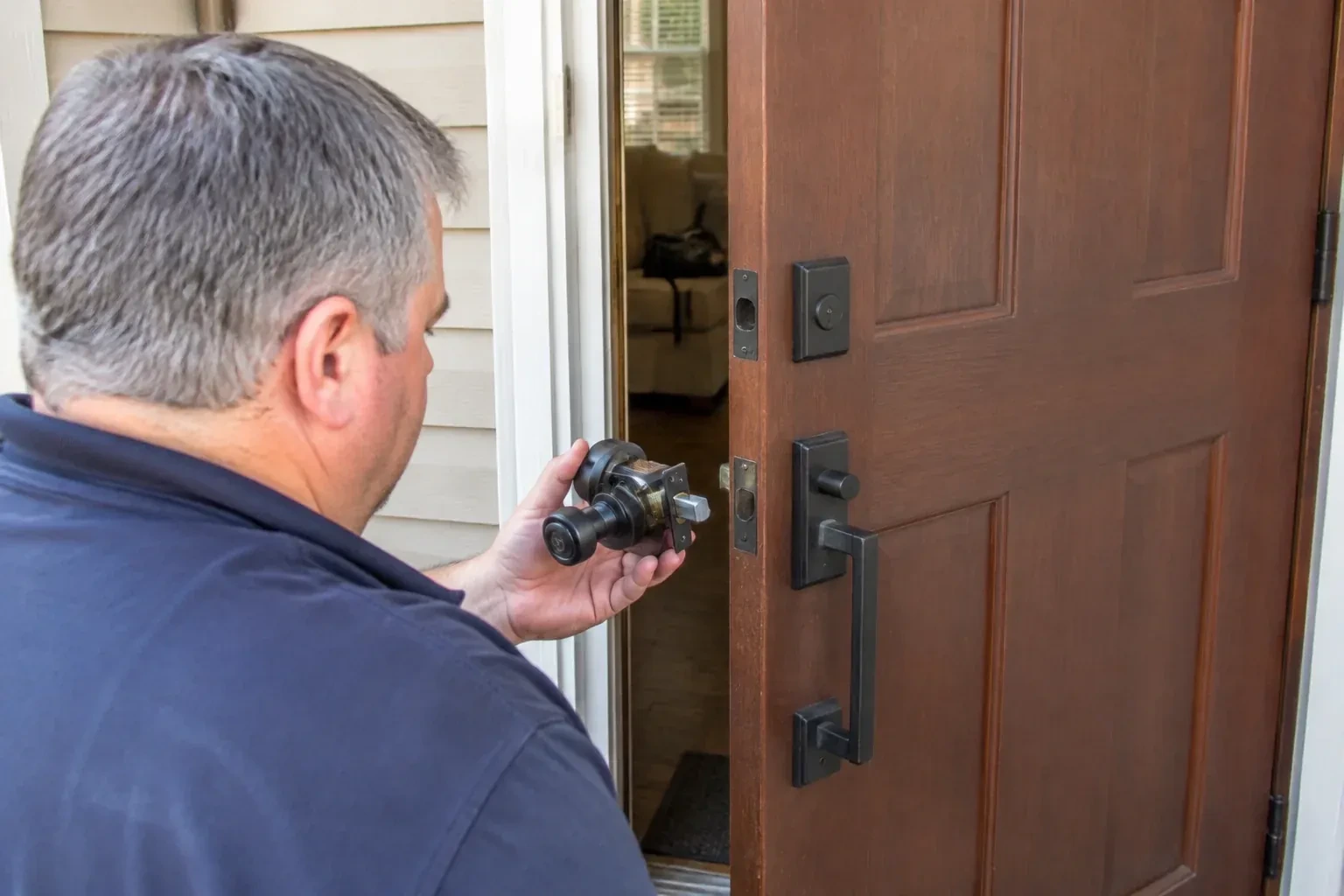
- The shop's lever handle goes down as usual, but the latch inside the mortise case never pulls back. Staff are waiting on the sidewalk with their coffees, the door is locked, and the handle is simply moving air.
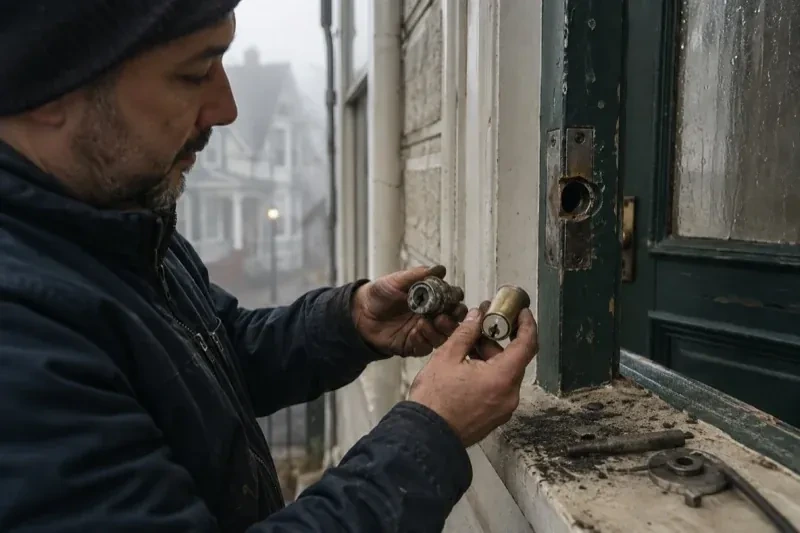
It is the coldest morning of the winter and the key goes halfway into the side door and stops. There is frost on the face of the cylinder, and the door on the shaded side of the house has done this before.
On storefronts, offices and older houses the hardware is often a mortise lock with a lever, and the jam is frequently inside the case, not the cylinder. A lever that swings without retracting the latch can point to a broken spring, a worn hub, or another fault in the drive path; a key that stops halfway can point to a bent spindle, an old case packed with dust, or a problem in the cylinder itself. Seized and jammed lock opening for this hardware means getting people through the door, then opening the case, cleaning the contact points, and fitting the part that gave up.
Sound familiar?Toronto
Seized & Jammed Lock Opening · Toronto
Scene 1
The last questions are about recent history. Has there been a thaw followed by a hard frost, or a stretch of humid days? Is this door on the shaded or windward side, or near a salted driveway? Was the door painted, re-hung, fitted with new weatherstripping or a storm door lately? Has anyone sprayed something into the keyway? Each answer changes the likely cause, and together they tell the locksmith whether this is a one-off, such as a freak freeze, or a lock that is going to keep doing this until the door or the lubrication habit is changed. The answers also shape the advice you leave with.
Scene 2
The job is finished with testing rather than with the last screw. The bolt is thrown and drawn back with the door open to prove the lock itself, then with the door closed to prove the door and strike, then from the inside with the thumb-turn or lever. Every key you hold is tried, including the spare from the drawer. If the door is a main exit, the locksmith confirms it opens from inside with one motion and no key. Any hardware that was adjusted is cycled a dozen times to make sure it stays put, and the finish is wiped clean of cleaner and lubricant.
Scene 3
A lock gives notice before it seizes, and now you know the signs. A key that needs a jiggle to seat, a plug that turns stiffly on cold mornings, a bolt that drags in its pocket, a lever that returns slowly, or a key that comes out gritty are all invitations to act while the fix is small. Stop as soon as a key begins to bend; a snapped key turns a service call into an extraction. A puff of dry lubricant or a turn of the strike screws often settles it, and a call while the lock still turns is a shorter visit than a call after it stops.
What shapes the quoteDavisville Lock & Key Co.
FeesSame any hour
The face of a building that never sees direct sun stays colder and damper, so ice in a keyway lasts days longer there and condensation sits in the cylinder rather than drying off. Wind-driven rain and snow tend to hit the same face. Those doors deserve a keyhole cover, a storm door where one fits, and a lubricant check before the season turns, and they are often the first lock a locksmith asks about.
Whatever lubricant and interval the cylinder's manufacturer specifies, applied with a few turns of the key. Stay with that one product, because mixing different lubricants can make a paste. Oil, hinge silicone and general-purpose penetrating sprays are kept out of the keyway. Lock manufacturers describe cleaning the cylinder with an electronic contact cleaner before lubricating, and that is the order the locksmith follows on a service too.
Three habits cover most of it. Lubricate the cylinder with a dry lock product twice a year and keep oils out of it. Check that the door locks with no pressure on it each spring and fall, snugging hinge and strike screws when it starts to drag. Keep a lock de-icer handy and fit a keyhole cover on exposed doors. And act on the first stiff turn, because a lock that still turns is a smaller job than one that has stopped.
TorontoOntario
Seized & Jammed Lock Opening · Bedford Park, Davisville, Lawrence Park, North Toronto
Every square is one home in a hundred.
On-site assessment
It is the coldest morning of the winter and the key goes halfway into the side door and stops.
(289) 217-4629, open 24/7.
On-site assessment preferred · (289) 217-4629, open 24/7