Skip to content
DavisvilleLock & Key Co.Open 24/7 (289) 217-4629
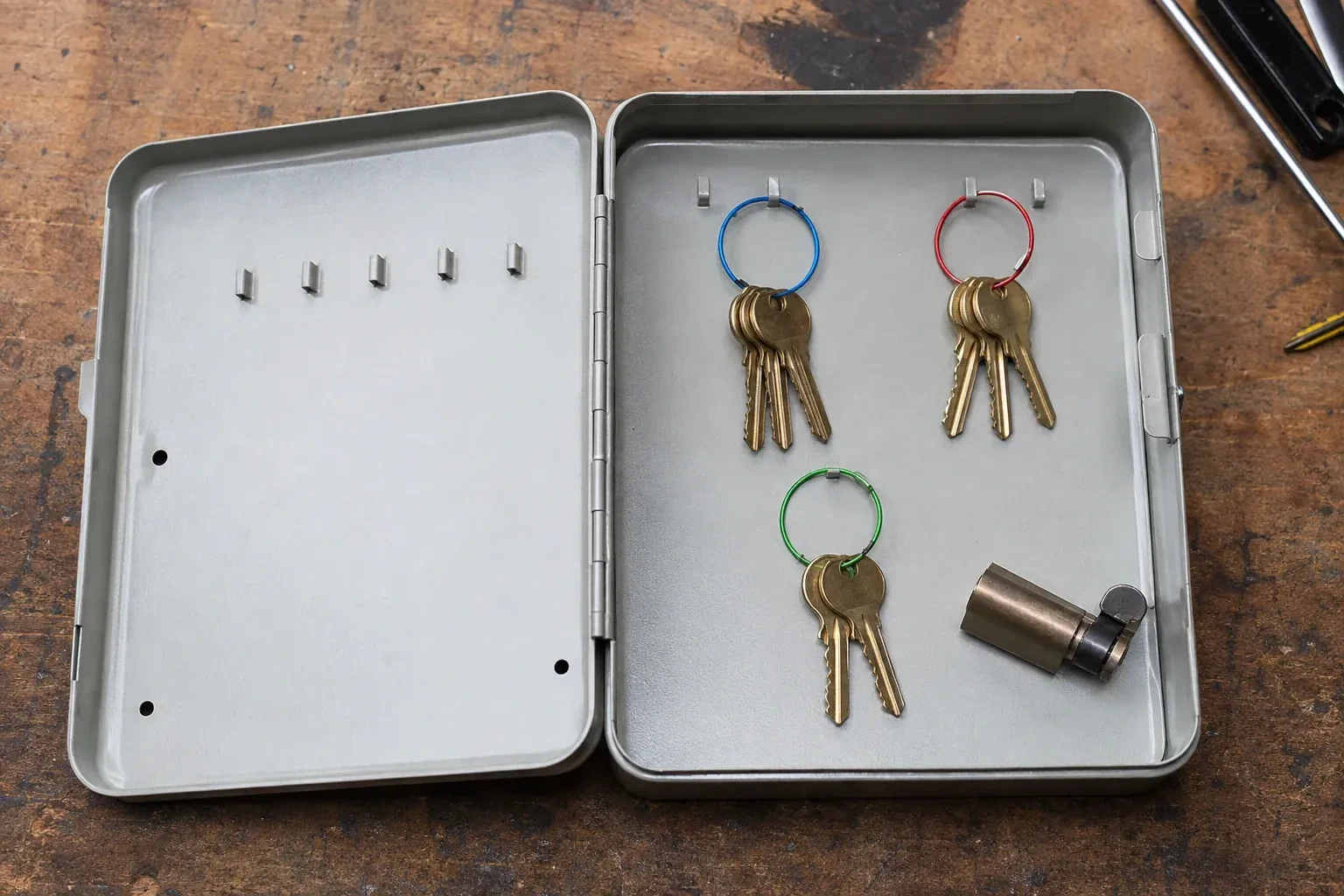
Three groups of keys on colored rings in an open metal key cabinet. — Master Key System Design, Toronto

Commercial · Toronto

Master Key System Design

The new wing was built with its own brand of cylinder, so the two-year-old keys from the original building do not open a single door in the addition. Staff are now carrying two separate key rings just to move around one workplace.
In plain words

Beyond convenience, master key system design is a security decision. It sets out who can duplicate a key, how many levels of access exist, and what scope the chart assigns to a lost key at each level, from one door up to the whole property for a top master. A restricted or patented keyway is often part of the answer, since it cuts down on copies being made anywhere other than through the record the owner controls. The result is a system where access matches role, duplication is tracked, and every missing key's designed scope is already known rather than guessed at afterward.

Sound familiar?Toronto

The call
The new wing was built with its own brand of cylinder, so the two-year-old keys from the original building do not open a single door in the addition. Staff are now carrying two separate key rings just to move around one workplace.

NextHow the visit goes

Master Key System Design · Toronto

How the visit goes

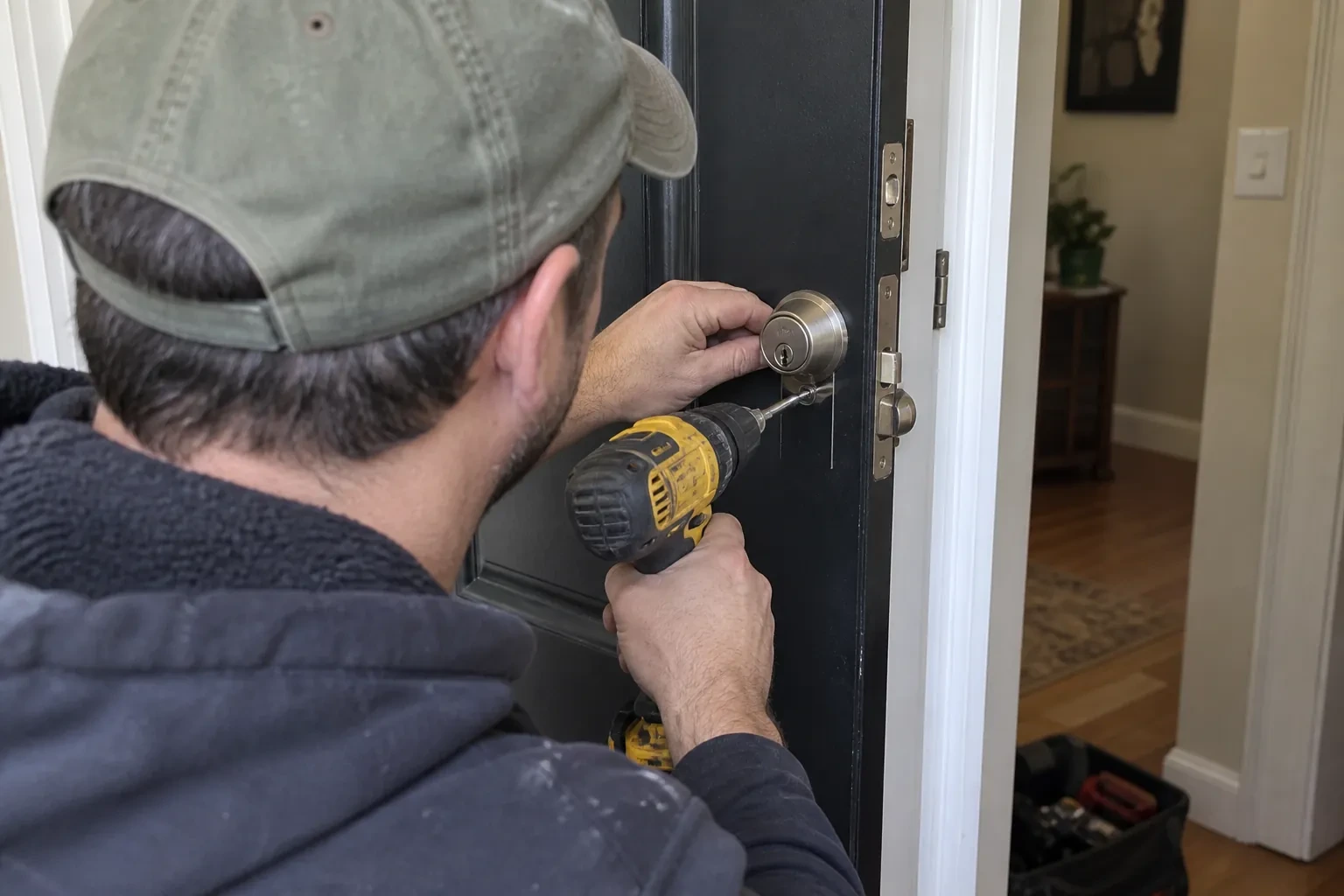
Person in a green cap holding a brushed-metal deadbolt against a dark door while a yellow drill rests below it.
  1. Scene 1

    Where a sub-master genuinely earns its place

    Not every group of doors needs its own level. The assessment looks for places where a sub-master is a real convenience, such as a department, a floor, or a set of storage rooms used by the same small team, rather than adding levels for their own sake. A hierarchy with more levels than the business actually uses is harder to manage and easier to get wrong later, so this stage is as much about deciding what not to build as it is about what to include, before any pins are cut or any key blanks are ordered.

  2. Scene 2

    Choosing a platform with room in it

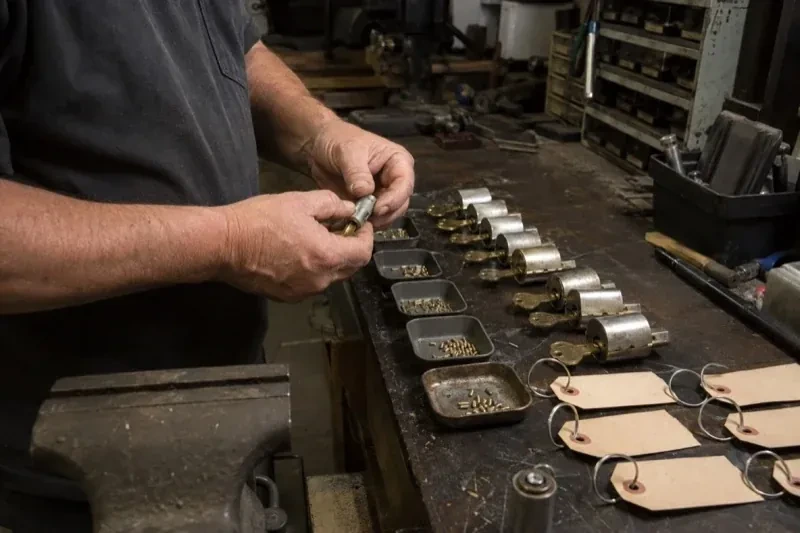
    The keying platform and keyway are chosen to hold every level the design calls for, plus a margin for doors that are likely to join later. Each cylinder is then pinned chamber by chamber to the planned bittings, with bottom and master pins stacked together to create the shear lines every level needs to turn that one cylinder. Getting this stacking right is what prevents a common mistake: a change key that, through an overlooked shared pin, quietly opens more than the door or keyed-alike group it was meant for.

  3. Scene 3

    A chart that answers the question on its own

    Once the project is finished, a single question, who can get into this room, has a single answer, visible on the chart without needing to track down whoever issued a key years ago. Every level is listed against the doors it opens and the people or roles holding it, so the record stays useful long after the locksmith has left, rather than fading into the same guesswork the project was meant to replace.

In the van

  • Compatible replacement cylinders
  • Cylinder pinning kit
  • Key marking tools
  • Plug follower and key gauge
  • Keying chart

What shapes the quoteDavisville Lock & Key Co.

Keyway chosen: standard or restricted
A restricted or patented keyway costs more in blanks and administration than a standard keyway, since duplication is controlled through the manufacturer's authorized record rather than cut anywhere. Higher-risk doors, such as records or cash rooms, often justify that additional control; lower-risk doors may not.
Testing scope before handover
Testing every cylinder individually and then testing each master and sub-master across its full group takes time proportional to how many doors and levels exist. A larger hierarchy with more levels to verify against more doors adds to that testing time.
Sub-master levels beyond the basics
One or two sub-master levels are typical for most properties. A more elaborate hierarchy, with several sub-masters covering overlapping departments or floors, takes longer to design correctly and test, and that additional design and testing time is reflected in the quote.

FeesSame any hour

Have it ready

Before you call · 0 / 3

(289) 217-4629

Ask us anything about locks

Do all the doors on my property need to be part of the master system?

No. Some doors, such as a private office or a room with a single regular user, can reasonably stay on their own key outside the hierarchy if there is no real benefit to including them. The assessment is partly about deciding which doors belong in the system and which are simpler left alone, rather than assuming every lock has to join.

What happens if a master-level key goes missing?

The current chart shows exactly which doors that level was designed to reach, which for a lost top-level master can mean the whole property rather than one group. Depending on how the key was lost and who else already holds that level, the usual options are repinning the affected cylinders and reissuing keys to the remaining holders; a restricted keyway lowers the odds of an unauthorized copy being cut but is not proof that one has not been made. Without a current chart, the first task is reconstructing that scope.

What happens to the old keys once a new system is cut?

Once the new pinning is tested and confirmed working, the old keys no longer operate the cylinders they used to, whether or not they are physically collected back. Collecting them anyway is good practice, since it closes the loop on how many old copies were in circulation and lets the business retire them rather than wonder where they ended up.

Torontoinformation

TorontoOntario

Master Key System Design · Bedford Park, Davisville, Lawrence Park, North Toronto

Town
Toronto
In business
27 years
Hours
Open 24/7
Nights, weekends and holidays, same fees
Visits
On-site assessment preferred. Request a visit or call.

2021 census: what it means at the door

Every square is one home in a hundred.

  • 58 in 100 homes · older homes
  • About 58% of homes in Toronto were built in 1980 or earlier, according to the 2021 Census.Older doors are usually thicker and made of solid wood, which is good news. They take a deadbolt well, hold longer strike screws, and reward reinforcement. The locksmith measures the thickness and backset so new hardware fits without fresh holes.
  • Single-detached houses make up about 23% of homes in Toronto (2021 Census).Suite doors in buildings often have a viewer, a chain and a deadbolt fitted at different times. A locksmith can tidy that into one sound arrangement, with a properly set deadbolt and a strike that holds, without altering the door's face.

Source: Statistics Canada, Census Profile

Open Toronto in Google Maps

On-site assessment

Request a visit.

The new wing was built with its own brand of cylinder, so the two-year-old keys from the original building do not open a single door in the addition.

(289) 217-4629, open 24/7.