Sound familiar?Toronto
- The call
- A safe sat in a late parent's basement for years, its combination known to nobody left in the family, and everyone would like to know what is actually inside it.
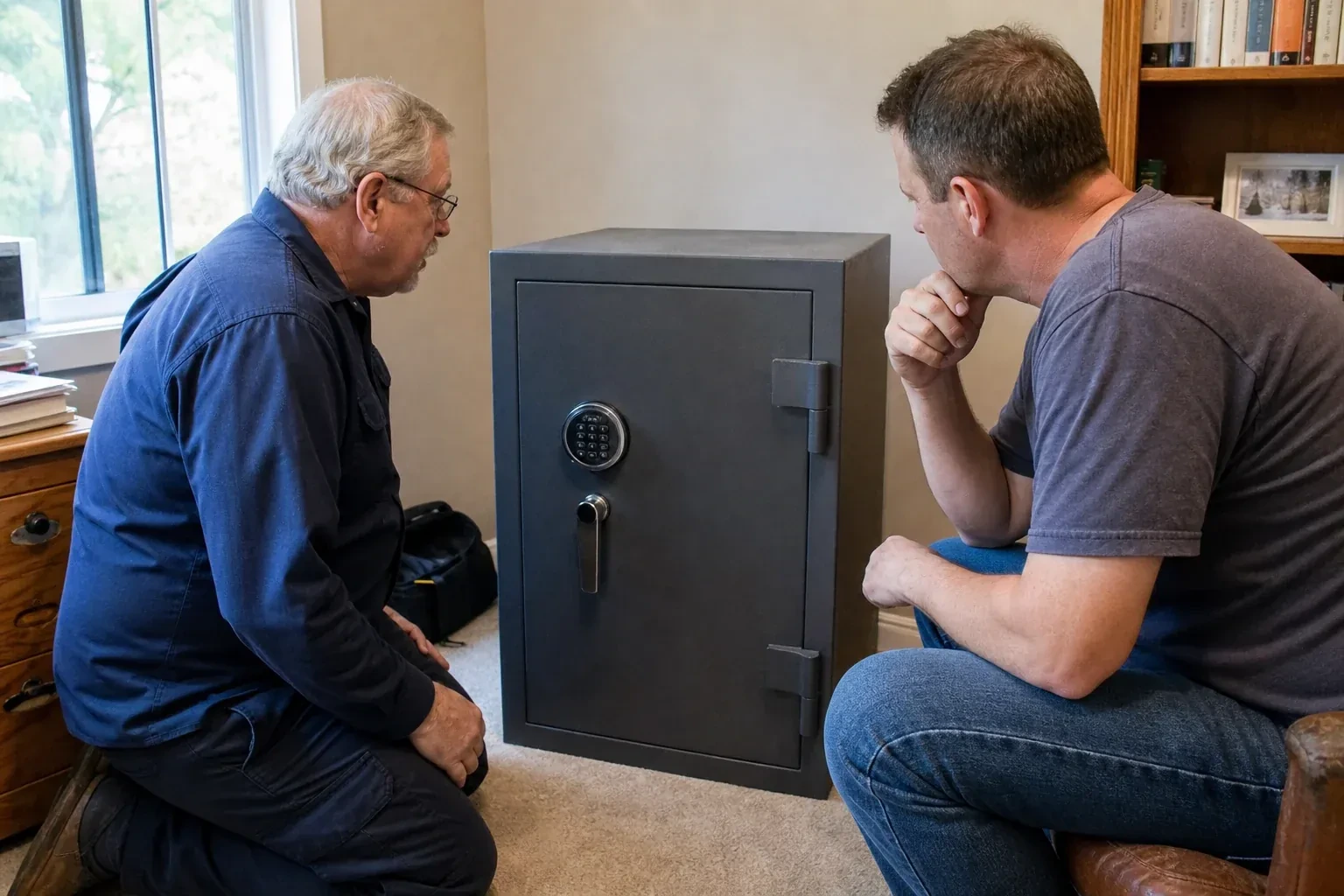
Safe opening favours the gentlest method that fits the particular safe and lock, with drilling kept as a later option rather than a first resort. Manipulation and decoding are tried first for a mechanical dial, and a manufacturer reset or override path where one exists for an electronic keypad. Where those routes are unavailable or exhausted, drilling enters the conversation, aimed at a point the maker's own service literature marks as reachable and repairable. Most safes that still have their original lock in reasonable condition never reach that last rung at all.
Sound familiar?Toronto
Safe Opening & Combination Change · Toronto
Scene 1
A safe's data plate, when it survives, often carries more than a model number: many list a UL security classification for the lock itself, information that tells the locksmith what level of manipulation resistance to expect and what tools the job calls for. Any paperwork the owner still has, a purchase receipt, a service record from a previous visit, or a manual tucked in a drawer, adds detail that speeds up identification. Where none of that survives, the locksmith builds the same picture by reading the hardware directly, just with a few extra minutes spent confirming what the plate would otherwise have said.
Scene 2
With the safe open and the lock confirmed sound, a new combination or code is set, with the current owner choosing the numbers themselves within whatever range and spacing that lock's rules allow, rather than being handed a default. For a mechanical lock this means using a change key to reset the wheel pack to the new sequence; for an electronic lock it means entering the new code through the keypad or a connected programming tool. The new combination is then dialed or keyed in several times, with the door open and then closed, before the visit is considered finished, so any mistake surfaces on the spot rather than the next morning.
Scene 3
A combination worth changing is worth writing down somewhere that is not the safe itself. A sealed note with a manager, a separate secure file, or a password manager used for other business records all work better than a sticky note in a nearby drawer or taped beneath the safe, which is one of the first places anyone would look. For a business, deciding in advance who updates that record when staff change keeps the next transition from repeating this one. The locksmith can suggest a simple system on the spot if none currently exists.
What shapes the quoteDavisville Lock & Key Co.
FeesSame any hour
There is no fixed schedule; the sensible trigger is a change in who knows it, such as an employee or manager leaving, rather than a set number of months or years. A combination that has only ever been known to current staff generally does not need changing on a routine basis, since the lock itself does not wear out from correct use the way a mechanical part might.
Drilling is chosen when the gentler options for that specific lock, manipulation and decoding on a mechanical dial, or a manufacturer reset or override on an electronic one, are unavailable or have not worked, rather than following one fixed order on every safe. It is also the answer when the lock has genuinely failed, such as a seized wheel pack or a dead circuit board with no working override. The decision is explained before drilling starts, not discovered afterward.
Somewhere away from the safe itself: a sealed note held by a manager, a separate secure file, or a password manager already used for other business records all work better than a note taped to or near the safe, which is one of the first places anyone would check. Deciding who updates that record when staff change is worth agreeing on before this visit ends.
TorontoOntario
Safe Opening & Combination Change · Bedford Park, Davisville, Lawrence Park, North Toronto
Every square is one home in a hundred.
On-site assessment
A software update reset the clinic's small safe overnight, and the receptionist's usual code now does nothing on a keypad that lights up but goes no further.
(289) 217-4629, open 24/7.
On-site assessment preferred · (289) 217-4629, open 24/7