Sound familiar?Toronto
- The call
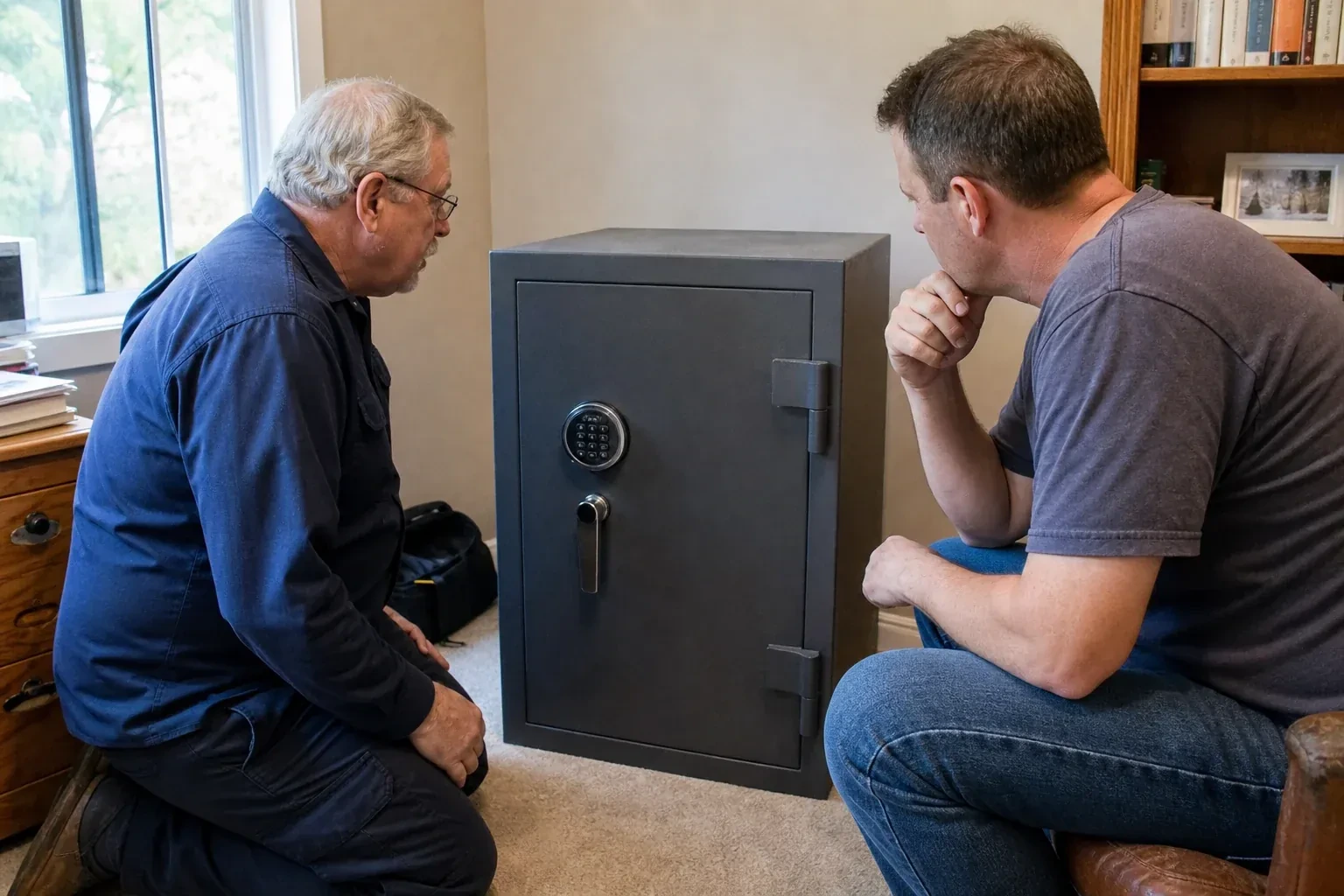
- The office is moving three blocks over, and the old commercial safe that has sat bolted to the concrete for fifteen years now needs to come out, travel across town, and go back down just as solidly.
A dinner service ends with a stack of bills and a handful of credit slips, and right now they sit in an unlocked cash box on a shelf until morning, because nobody has gotten around to anything sturdier.
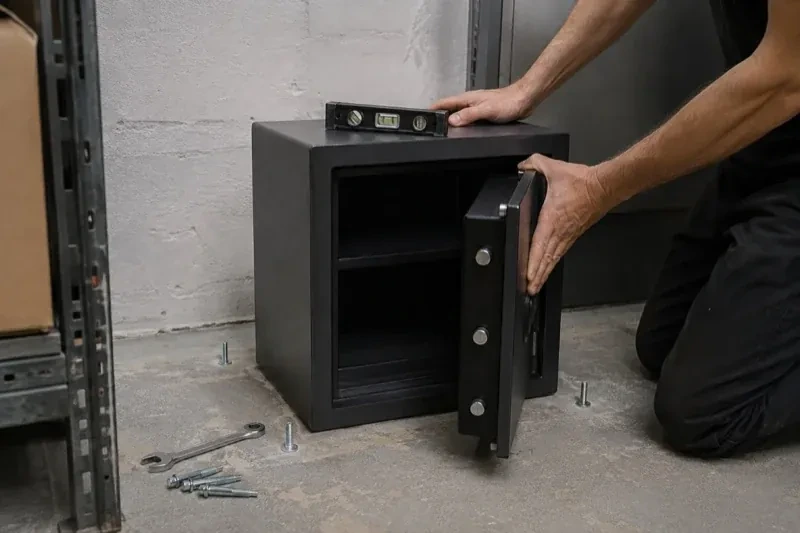
For a household bringing in its first real safe, the service covers everything between the empty spot on the floor and a working, anchored unit with a combination only the family knows. The locksmith walks through what the safe needs to hold, checks the floor or wall it will sit against, positions and levels it, and secures it with anchor bolts suited to that surface. The lock is set and cycled several times with the owner watching, so the last step of the visit is confirming, together, that it opens and closes exactly as it should.
Sound familiar?Toronto
Safe Installation & Servicing · Toronto
Scene 1
The surface behind the safe decides how it gets anchored, so it is checked before anything is ordered. Solid concrete accepts one style of anchor bolt; a wood subfloor over joists needs a different fastener reaching into structural framing rather than just the surface layer; a tiled floor cannot take a bolt at all without risking a crack around it. The locksmith also looks for slope, dampness, or a cold exterior wall that could sweat in humid weather, since all three affect where the safe should actually stand, not just how it gets bolted down.
Scene 2
The visit begins by separating two decisions that people often blur together. Some burglary ratings come from an independent lab timing how long a trained attempt with real tools takes to force the door, expressed in minutes of net working time; others are construction classifications based on steel thickness and body design rather than a timed attack. A fire rating comes from a timed furnace test that measures how hot the interior gets, expressed as a temperature ceiling held for a set number of hours. A unit is chosen, or confirmed if it is already owned, against both numbers separately rather than a single vague idea of how secure a safe looks.
Scene 3
A safe does not announce when it needs attention the way a squeaky hinge does, so it helps to put a rough date on the calendar rather than waiting for a sign of trouble. Checking the bolt-work, the batteries, and the door seal every year or two catches small stiffness or corrosion long before it becomes a stuck lock. Businesses with heavier daily use, such as a till safe opened many times a shift, generally benefit from a shorter interval between checks than a document safe opened rarely.
What shapes the quoteDavisville Lock & Key Co.
FeesSame any hour
The visit opens with a look at what the safe needs to protect and where it will sit, moves into positioning and anchoring for a new unit or bolt-work and lock testing for an existing one, and ends with the lock cycled several times and a combination or code set that only the owner knows. The exact order shifts depending on whether the job is a new installation or ongoing servicing.
Yes, on an electronic keypad that supports multiple users, each person can be given a separate code rather than everyone sharing one, which also makes it simple to remove a single code later without resetting the whole lock. A mechanical dial lock, by contrast, has one combination for everyone who needs it, so a change in who has access there means changing that one combination.
A mechanical dial has no battery and is set by hand to a private combination, turning through a sequence to release the bolt; it never runs out of power but takes a little practice to open. An electronic keypad accepts a numeric code and can support several separate codes for different people, but it depends on a battery that eventually needs replacing. Many owners choose based on how many people need access rather than one being simply superior to the other.
TorontoOntario
Safe Installation & Servicing · Bedford Park, Davisville, Lawrence Park, North Toronto
Every square is one home in a hundred.
On-site assessment
A dinner service ends with a stack of bills and a handful of credit slips, and right now they sit in an unlocked cash box on a shelf until morning, because nobody has gotten around to anything…
(289) 217-4629, open 24/7.
On-site assessment preferred · (289) 217-4629, open 24/7